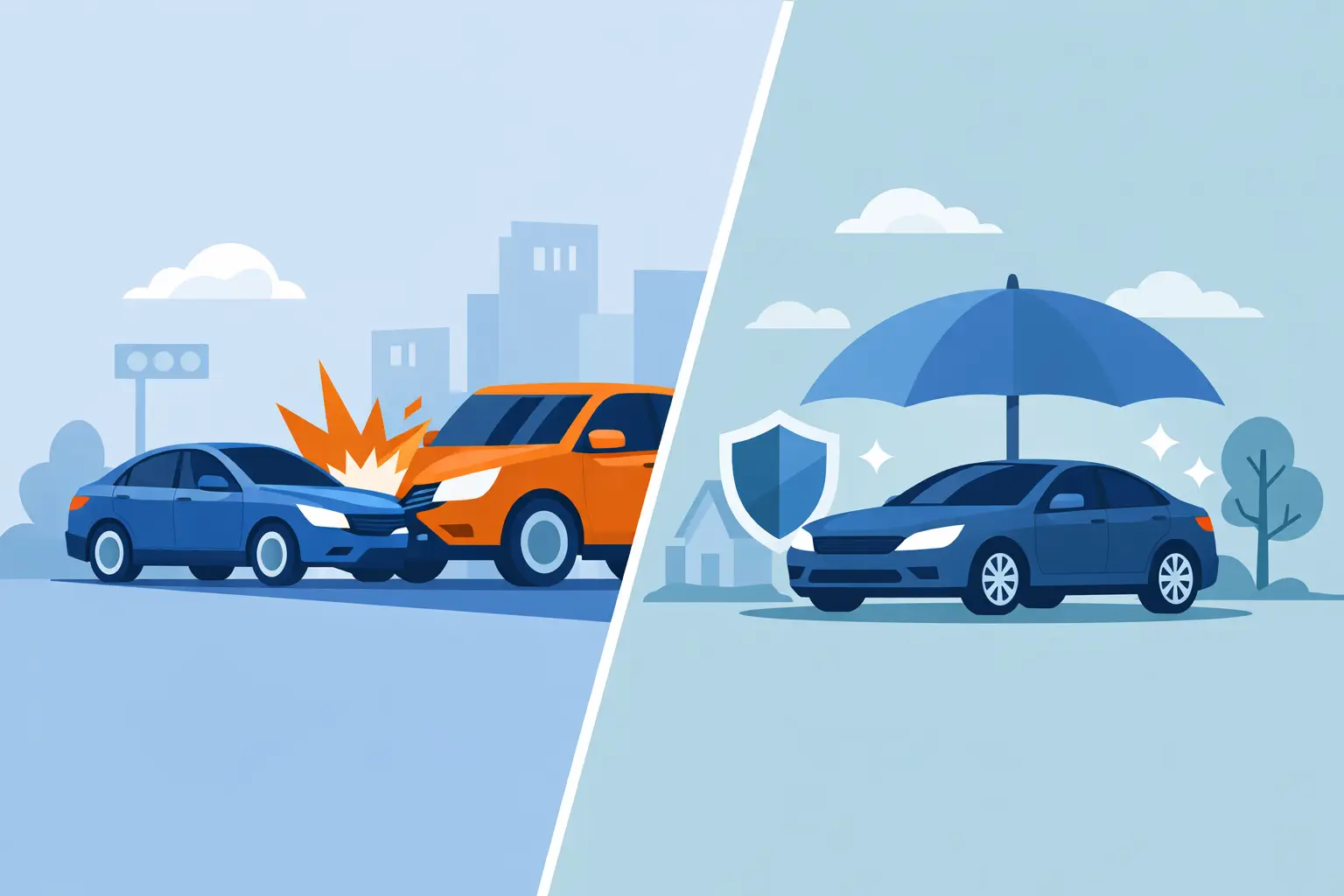
Collision Versus Comprehensive Coverage Explained
A shopping-cart dent, a deer on a dark rural road, a stolen vehicle from a Toronto driveway – all can leave you asking the same question: will my auto policy respond? Understanding collision versus comprehensive coverage helps you see where protection for your own vehicle begins, where it stops, and what you may be paying for when you choose a deductible.
For Ontario drivers, these coverages are generally optional. That can make them tempting places to cut costs, especially when renewal premiums rise. But optional does not mean unnecessary. The right decision depends on your vehicle’s value, how you use it, where it is parked, your financing arrangements, and how much financial risk you can comfortably carry yourself.
What is collision coverage?
Collision coverage, sometimes called collision or upset coverage, may pay to repair or replace your vehicle after it collides with another vehicle or object, or after it rolls over. It is designed for damage caused by the impact itself.
For example, collision coverage may apply if you slide into another car on an icy Mississauga road, reverse into a concrete post in a parking garage, or lose control and hit a guardrail. It can also respond after a single-vehicle accident, even when no other driver is involved.
This matters because mandatory liability insurance is primarily there to protect you if you injure someone or damage their property. It does not automatically pay for repairs to your own vehicle when you are at fault. Without collision coverage, you may need to pay those repair or replacement costs out of pocket.
The coverage is usually subject to a deductible. If your deductible is $1,000 and covered repairs cost $6,000, the insurer would generally pay $5,000, subject to your policy’s terms and claim assessment. Choosing a higher deductible can lower your premium, but it also means accepting more expense after a claim.
What is comprehensive coverage?
Comprehensive coverage is often known in Ontario policies as comprehensive or specified perils coverage. Unlike collision, it is intended for many losses that happen other than a collision or rollover.
Common examples include theft, vandalism, fire, hail, windstorm damage, falling objects, broken glass, and damage caused by an animal. If a tree branch falls on your parked vehicle during a storm, or someone steals your SUV from outside your Brampton home, comprehensive coverage may be the part of the policy that responds.
It can be especially relevant in the GTA, where vehicle theft remains a serious concern for many owners. A vehicle’s make, model, theft history, overnight parking location, and security features can all affect the risk an insurer sees. Comprehensive coverage will not prevent a theft, but it can protect you from bearing the entire financial loss if one occurs.
Like collision coverage, comprehensive coverage normally includes a deductible. Glass-only claims may have different deductible options or terms, depending on the insurer and policy. A small windshield chip may be worth paying for yourself rather than making a claim, while a badly damaged windshield or a major theft loss requires a different calculation.
Collision versus comprehensive coverage: the key difference
The simplest distinction is the cause of the damage. Collision coverage addresses impact-related damage to your vehicle. Comprehensive coverage addresses many non-collision events, such as theft, weather, fire, vandalism, or an animal strike.
There are situations that can feel less obvious. If you hit a deer, the loss is generally treated as comprehensive rather than collision. If you swerve to avoid the deer and strike a tree, the tree impact is generally treated as collision. Policy wording, the facts of the incident, and the insurer’s assessment ultimately determine how a claim is handled.
Neither coverage is a substitute for every part of an Ontario auto policy. Accident benefits can help with certain injury-related expenses after an accident. Liability coverage can address claims made against you by others. Direct compensation property damage may apply in qualifying not-at-fault accidents involving another Ontario-insured vehicle. Each coverage has its own role, conditions, and limits.
Do you need both coverages?
Many drivers choose both collision and comprehensive coverage because the risks are different. A newer vehicle can be damaged in a parking-lot accident one month and targeted for theft the next. Carrying only one coverage means leaving the other category of loss uninsured.
That said, buying both is not automatically the right answer for every vehicle. The decision should reflect the vehicle’s current value, not just what you originally paid for it. If an older vehicle is worth only a few thousand dollars, the annual premium and deductible may represent a significant portion of what the insurer could ultimately pay after a total loss.
On the other hand, a modestly valued vehicle may still be expensive to replace for the owner who relies on it for commuting, school runs, client visits, or family responsibilities. Its practical value can be higher than its resale value. That is why a quick online estimate should not be the only factor in your decision.
If your vehicle is leased or financed, your lender or leasing company will often require collision and comprehensive coverage. This protects its financial interest in the vehicle while there is an outstanding balance. Removing coverage without checking your agreement could put you in breach of your financing terms.
How deductibles affect your decision
A deductible is one of the most direct ways to balance premium savings against the amount you would pay after a covered loss. Raising the deductible may reduce your annual premium. It also means you need access to that amount if your vehicle is damaged, stolen, or written off.
A lower deductible can feel reassuring, particularly for households that cannot easily absorb a large unexpected expense. A higher deductible may suit a driver with emergency savings who wants to control the yearly cost of insurance. Neither choice is universally better.
Before selecting a deductible, consider whether you would actually claim a loss close to that amount. A $1,500 deductible on an older vehicle may make small collision claims impractical. It may still provide meaningful protection against a serious accident, theft, or major weather event. The question is not only whether a claim is possible, but whether the coverage protects you from a loss that would materially disrupt your finances.
What these coverages may not pay for
Collision and comprehensive coverage have exclusions and conditions, so it is wise to avoid assuming every type of vehicle problem is insured. They generally are not intended to cover ordinary wear and tear, mechanical breakdown, rust, deterioration, routine maintenance, or loss caused by intentional acts.
They may also be affected by how the vehicle was used. Using a personal vehicle for delivery work, ridesharing, business travel, or other commercial purposes can create coverage concerns if the policy does not reflect that use. The same is true when a household adds a new driver, changes its address, purchases aftermarket modifications, or begins parking the vehicle in a different location.
Keeping your broker informed protects more than your paperwork. It gives you an opportunity to confirm that your coverage still matches your real life before a claim puts that question under pressure.
A practical way to choose your coverage
Start with the vehicle. Consider its estimated value, replacement cost, age, repair costs, and whether it is financed or leased. Then consider your exposure: daily highway commuting, street parking, theft risk, winter driving, long-distance travel, and how dependent your household is on the vehicle.
Next, look at your budget beyond the monthly premium. Ask what you could realistically pay tomorrow after a $1,000, $2,000, or larger loss. If replacing the vehicle would be difficult without insurance proceeds, collision and comprehensive coverage may offer valuable stability.
Finally, compare the policy as a whole rather than choosing solely on the lowest quote. Deductibles, rental vehicle options, claims service, endorsements, vehicle use, and insurer terms can make a meaningful difference. An independent broker can compare options from multiple insurers and explain where a lower premium may involve a higher deductible or narrower protection.
A good auto policy should give you clarity before an accident, not surprises afterward. Whether you drive across Toronto each day or use your car mainly for family errands, a licensed broker at Multi Risk Insurance Brokers & Financial Group Inc. can help review the trade-offs and find coverage that fits your vehicle, budget, and comfort with risk.