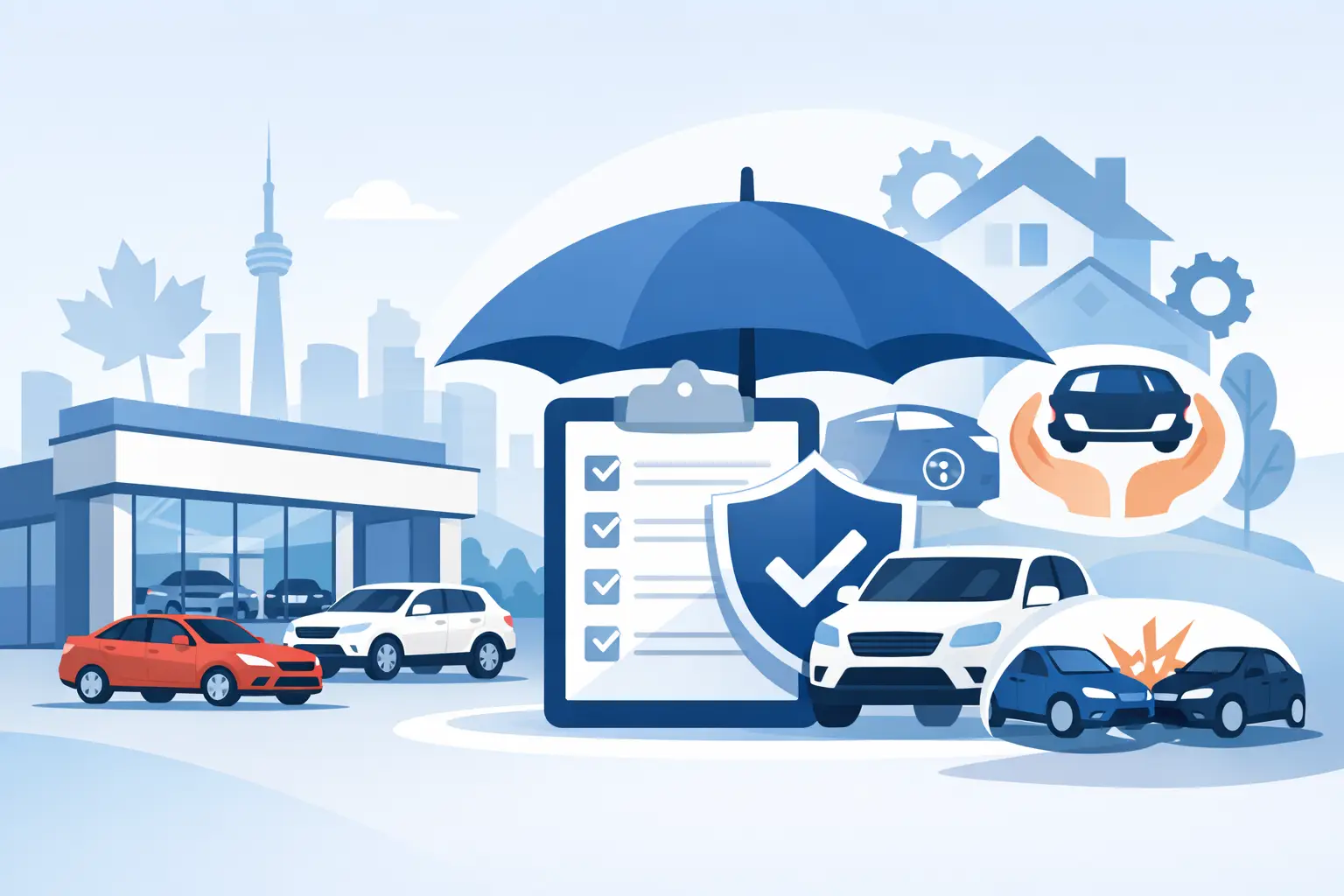
Car Dealership Insurance Ontario: What to Cover
A vehicle can be damaged, stolen or involved in a collision before it is ever sold. That is why car dealership insurance Ontario is not simply a standard commercial policy with a larger vehicle limit. A dealership needs protection that reflects how vehicles move through its lot, who drives them, where keys are kept, how financing and customer information are handled, and whether the business also repairs, details or transports vehicles.
For dealers in Toronto and the GTA, the right insurance program starts with an accurate picture of the operation. A small independent used-car lot faces different exposures than a franchised dealership with a service department, parts inventory and multiple locations. The goal is not to buy every available add-on. It is to arrange coverage that responds to the losses that could interrupt the business or put its assets at risk.
Why dealership risks need specialized coverage
A dealership has several high-value exposures operating at once. Vehicles held for sale may be parked outdoors, moved between locations, loaned to prospective buyers or taken on test drives. A severe hailstorm, fire, theft, vandalism or multi-vehicle collision can create a significant loss quickly.
Liability risks are equally important. A customer may allege that they were injured on the premises, a staff member could be involved in a crash while driving a dealer vehicle, or an error in paperwork could lead to a dispute. Where service, repairs or detailing are offered, the risk profile expands further. A vehicle left in the dealership’s care could be damaged, or a repair issue could result in a claim.
Ontario dealers must also meet operational and regulatory obligations that may affect their insurance requirements. Registration, licensing, lender agreements, lease arrangements and commercial property leases can all require specific limits, certificates or named parties. A broker can review these requirements alongside the policy wording so a requested document does not reveal a gap after a loss.
Core car dealership insurance in Ontario
A well-built policy usually combines several coverage sections. The exact structure and limits depend on the dealership’s size, vehicle values, services and insurer eligibility.
Dealer vehicle and inventory protection
Dealer physical damage coverage, often described as garage auto or open-lot protection, is central to most dealership insurance programs. It can protect owned vehicles held for sale against covered causes of loss, including theft, fire, vandalism and collision, subject to the policy terms, deductibles and valuation basis.
Inventory values deserve close attention. A lot with 25 economy vehicles has a very different exposure from one holding luxury SUVs, collector vehicles or commercial trucks. Coverage should reflect the peak value of stock, not only the average value on a quiet weekday. Seasonal purchasing, auctions and vehicles awaiting reconditioning can push inventory higher than expected.
Dealers should also ask how coverage applies when a vehicle is off premises. Vehicles may be transported between lots, delivered to buyers, taken for servicing or driven by an employee. The answer can vary by insurer and policy wording, so assumptions are costly here.
Commercial auto and test-drive liability
Commercial auto coverage protects against liability arising from the use of insured dealer vehicles. It is particularly relevant for test drives, demos, courtesy vehicles and business errands. Ontario automobile liability requirements set a legal baseline, but many dealerships need higher limits to reflect the value of vehicles, the volume of traffic and the potential severity of a claim.
Test-drive procedures matter to insurers. A clear process for confirming a driver’s licence, documenting permission, accompanying drivers where appropriate and controlling dealer plates can support better risk management. The policy should be reviewed for how it treats employees, customers, prospective purchasers and occasional drivers.
It is also worth discussing non-owned automobile liability. Employees may use personal vehicles for dealer errands, bank runs, parts pickups or client visits. A personal auto policy may not fully address business use or the dealership’s liability exposure. This coverage can be a practical safeguard when privately owned vehicles are used for company purposes.
Commercial general liability
Commercial general liability, or CGL, addresses many third-party bodily injury and property damage allegations that do not arise directly from driving an automobile. Examples include a customer slipping on an icy walkway, being injured in the showroom, or claiming their property was damaged during a visit.
A lease, lender or supplier contract may specify a required liability limit. Do not treat that requested limit as a complete risk assessment. The contract requirement is one consideration, while the dealership’s location, customer traffic, operations and assets may justify additional protection or an umbrella liability policy.
Property and business interruption coverage
The building, office furnishings, computers, lifts, diagnostic equipment, parts, signage and tools all need to be considered. If the dealership leases its premises, the tenant may still be responsible for improvements and betterments, glass, signage or other property under the lease.
Business interruption coverage is often overlooked until a fire, water loss or major storm closes the premises. It can help with lost income and continuing expenses after a covered property loss, subject to the policy conditions. The appropriate indemnity period depends on how long it would realistically take to rebuild, replace specialized equipment, restore operations and replenish vehicle inventory.
Coverage gaps that can be expensive
The most costly insurance problem is often not an uninsured event. It is a policy that applies, but with a limit, exclusion or condition that does not match the dealership’s actual operations.
Crime coverage is one example. Dealerships handle deposits, payment information, keys, electronic transfers and valuable inventory. Employee dishonesty, social engineering fraud and forgery can require different protection than a basic theft provision. Controls such as dual approval for payment changes and verified callbacks for wire instructions are just as important as the policy itself.
Cyber liability is another growing concern. Dealerships may hold financing documents, driver licence details, customer addresses and payment-related information. A cyber incident can involve privacy response costs, business disruption, data recovery and legal obligations. The right limit depends on the amount and type of information held, the software systems used and the dealership’s ability to continue operating during an outage.
For dealers with service bays, repair operations or bodywork, garagekeepers coverage and operations liability should be reviewed carefully. This can be relevant when customer vehicles are in the dealership’s care, custody or control. Pollution liability, equipment breakdown and employment practices liability may also be appropriate depending on the work performed and the size of the team.
What affects the cost of dealership insurance?
Premium is based on more than the number of vehicles on the lot. Insurers generally consider inventory values, vehicle types, location, building construction, security features, claims history, annual sales, employee driving records, repair operations, deductibles and requested liability limits.
Security can make a meaningful difference to both underwriting and loss prevention. Fencing, lighting, monitored alarms, camera coverage, key-control procedures, secure storage and documented closing routines can reduce opportunities for theft and vandalism. However, a security upgrade does not automatically mean lower pricing. Its effect depends on the insurer, the location and the dealership’s broader risk profile.
A higher deductible may reduce premium, but it should be chosen carefully. The dealership needs to be able to absorb that amount without affecting cash flow after a theft, weather event or collision. Lower premium is valuable only when the retained risk remains manageable.
How to prepare for a better insurance quote
Accurate information helps a broker approach insurers with a complete, credible submission. Before requesting quotes, gather recent loss details, estimated peak inventory values, annual revenue, a list of services offered, vehicle-use procedures and details of current security measures.
Be direct about changes to the business. Adding a repair bay, expanding to another lot, selling higher-value vehicles, offering delivery services or increasing test drives can all change the insurance need. Waiting until renewal can leave a dealership exposed during the period when operations have already changed.
It also helps to compare more than premium. Review the deductible, vehicle valuation method, exclusions, off-premises protection, test-drive terms, business interruption period and claims service. Two policies with similar prices can respond very differently when several vehicles are damaged in one event.
An independent broker can help compare options from multiple insurers, explain the terms in plain language and negotiate coverage that fits the dealership’s budget and operations. Multi Risk Insurance Brokers & Financial Group Inc. can also support policy reviews as the business grows, because the insurance program should evolve alongside the lot, staff and services.
The right time to review dealership coverage is before the next vehicle arrives, the next service is added or the next lease is signed. A short conversation now can give you clearer limits, practical loss-prevention steps and confidence that your business is protected when a costly surprise occurs.