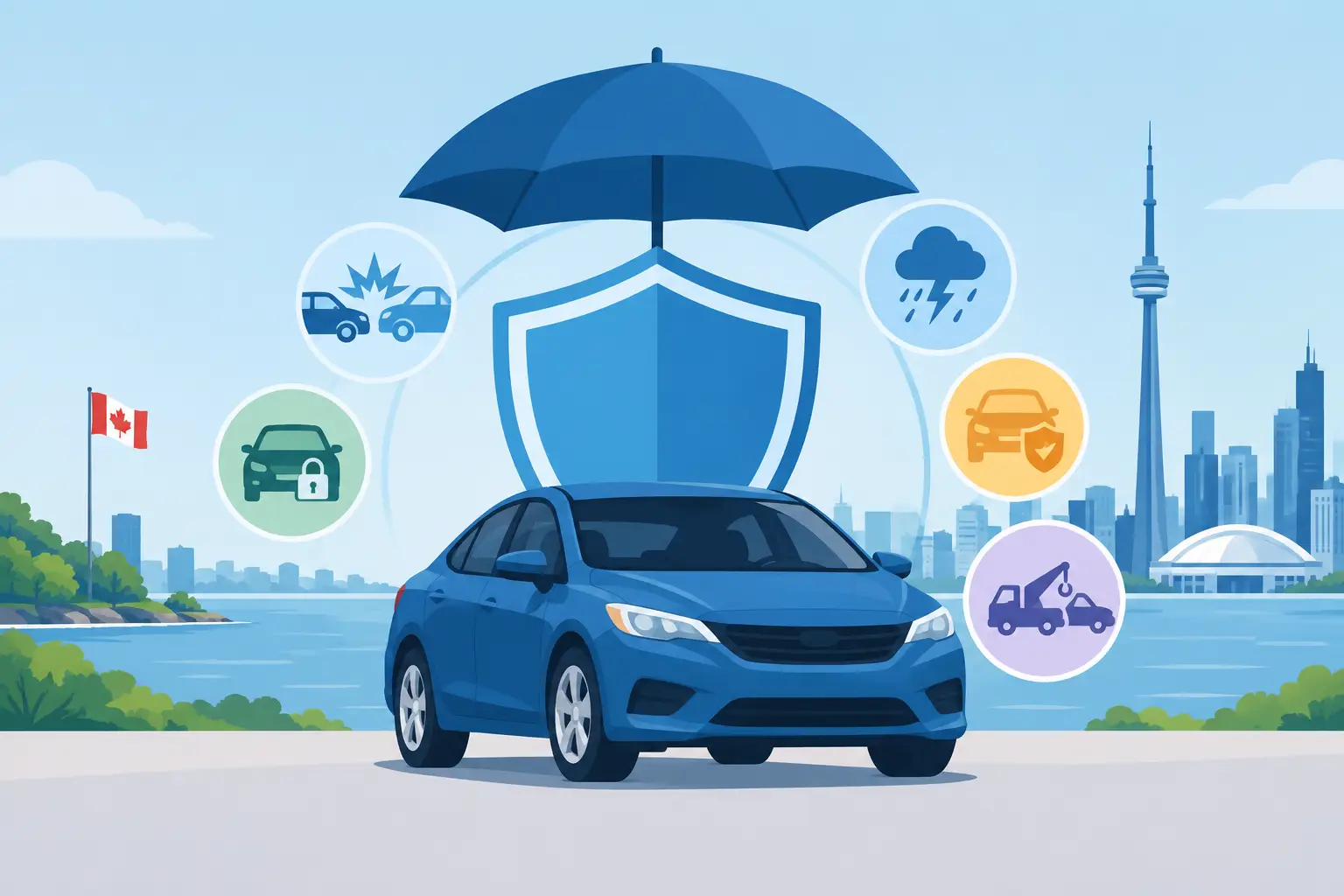
What Auto Insurance Covers for Ontario Car Owners
A minor collision on Highway 401 can become expensive quickly. Between vehicle repairs, medical recovery, a rental car and a possible liability claim, the financial impact can reach far beyond the initial damage. Auto insurance is designed to protect Ontario drivers from those costs while helping them meet their legal obligations on the road.
For drivers in Toronto and the GTA, the right policy is not simply the cheapest one available. It should reflect the vehicle you drive, where and how often you drive it, who uses it, and how much financial risk you are prepared to take on after an accident. Understanding the building blocks of a policy makes it easier to compare quotes with confidence.
What auto insurance is required in Ontario
Ontario drivers must carry several types of coverage before they can legally operate a vehicle. These coverages form the foundation of an Ontario Automobile Policy, but the amounts and options you choose can make a meaningful difference if a serious claim occurs.
Third-party liability coverage protects you if you injure someone or damage their property in an accident where you are legally responsible. It can help cover another person’s medical costs, lost income, legal expenses, vehicle damage, or property damage. Ontario requires at least $200,000 in liability coverage, though many drivers choose $1 million or $2 million because a major injury claim can exceed the minimum quickly.
Accident benefits coverage helps pay for certain medical, rehabilitation, income replacement, attendant care and caregiver expenses after an accident, regardless of who caused it. The standard benefits may be sufficient for some situations, but higher limits can provide more protection for drivers with dependants, limited workplace benefits, or a greater need for ongoing care following a serious injury.
Uninsured automobile coverage can respond if you are injured or your vehicle is damaged by an uninsured or unidentified driver. It is a critical safeguard in hit-and-run situations, where recovering compensation directly from the at-fault driver may not be possible.
Direct Compensation Property Damage, often called DCPD, is generally part of Ontario auto insurance for drivers who have not opted out. It allows you to claim through your own insurer for vehicle damage and certain loss-of-use costs when another identified Ontario-insured driver is at fault. Since January 2024, eligible drivers can choose to opt out of DCPD coverage. This may reduce the premium, but it also means giving up coverage for damage to your own vehicle in many not-at-fault collisions. It is a decision worth reviewing carefully rather than making on price alone.
Coverage that protects your own vehicle
Mandatory coverage does not automatically pay to repair or replace your vehicle after every accident. That protection usually comes from optional physical damage coverages, which are particularly relevant if your vehicle is newer, financed, leased, or difficult to replace from savings.
Collision or upset coverage can pay for repairs when your vehicle hits another car, an object, or rolls over. If you cause an accident, this is the coverage that may protect your own vehicle. It is often sensible for drivers whose vehicle has significant value or who could not comfortably absorb a major repair bill.
Comprehensive coverage addresses many non-collision losses, such as theft, vandalism, fire, falling objects, hail and certain weather-related damage. In the GTA, it can be valuable for vehicles parked outdoors, stored in shared garages, or exposed to theft risk. Specified perils coverage is a narrower alternative that covers only the risks named in the policy.
All perils coverage combines collision and comprehensive protection and may provide added theft-related protection in certain circumstances. Whether it is worth the additional cost depends on the vehicle, the deductible and the difference in premium.
A deductible is the amount you agree to pay toward an insured loss before your policy responds. Choosing a higher deductible can lower your premium, but it should still be an amount you could manage without financial strain. A $2,500 deductible may look attractive on a quote until a repair is needed unexpectedly.
The details that can change your premium
Insurers price auto insurance based on risk, not just the vehicle’s purchase price. Two drivers with similar cars can receive very different premiums because their circumstances are different.
Your driving record is a major factor. Tickets, at-fault accidents, licence suspensions and insurance lapses can affect both your rate and the insurers willing to offer coverage. The number of years you have been licensed, prior insurance history and claims record also matter.
Location can influence pricing as well. Postal codes in Toronto, Brampton, Mississauga, Markham, Scarborough and Vaughan may have different claims patterns involving collisions, theft, traffic density and repair costs. Where the vehicle is parked overnight can also be relevant.
Insurers will ask about annual kilometres, commuting distance, the vehicle’s primary use and every regular driver in the household. Accurate information is essential. Listing a lower-risk driver as the primary driver when someone else uses the vehicle most often, sometimes called fronting, can create serious problems during a claim and may result in policy cancellation.
The type of vehicle matters beyond its sticker price. Repair costs, safety features, theft frequency, parts availability and performance characteristics can all influence the cost to insure it. Before buying a vehicle, obtaining an insurance estimate can prevent an unwelcome surprise after the purchase agreement is signed.
How to choose limits and options that fit
The best auto insurance policy is personal. A retired driver who uses a paid-off vehicle occasionally may reasonably make different choices than a family commuting daily from Brampton to downtown Toronto or a contractor carrying equipment between job sites.
Start by considering the financial loss you would face in three situations: causing a serious injury accident, losing your vehicle to theft, and being unable to work or manage family responsibilities after an injury. These questions help put liability limits, accident benefits and physical damage coverage into practical context.
You should also consider whether you need optional endorsements. Loss of use coverage can help with a rental vehicle or transportation costs after an insured loss. Depreciation waiver coverage may help protect a qualifying new vehicle from depreciation for a set period if it is written off or stolen. Accident forgiveness may protect your premium from an increase after an eligible first at-fault accident, although it does not erase the accident from your driving history.
There is no universal answer on whether to carry collision or comprehensive coverage on an older vehicle. Compare the vehicle’s realistic replacement value against the annual premium and deductible. If paying for a replacement would be difficult, retaining coverage may be worthwhile. If the vehicle has modest value and you have savings set aside, reducing coverage could make sense.
Why comparison should include more than price
A low premium is useful only when the policy still provides the protection you expect. Two quotes can look similar while containing different deductibles, liability limits, rental coverage, endorsements or eligibility conditions. The least expensive option may leave a gap that becomes costly after a claim.
An independent broker can compare available options across insurers and explain the differences in straightforward terms. At Multi Risk Insurance Brokers & Financial Group Inc., licensed professionals help clients review their driving needs, identify appropriate coverage and look for competitive rates without treating every driver as the same risk.
A policy review is also worthwhile when circumstances change. Moving, adding a newly licensed driver, buying a vehicle, changing jobs, beginning a longer commute, getting married or starting a home-based business can all affect your coverage needs. Updating the policy promptly helps avoid uncertainty when you need to make a claim.
When an accident happens
Your first priority after an accident is safety. If anyone is injured, call for emergency assistance. Exchange required information, take photos when it is safe to do so, and report the accident as required. Avoid admitting fault at the scene, since liability can depend on facts that are not immediately clear.
Notify your insurer or broker as soon as possible. Keep records of towing, repairs, rental arrangements and conversations related to the loss. Claims can feel stressful, especially when transportation, work and family obligations are affected, but clear information and timely reporting can help move the process forward.
Auto insurance should give you more than proof that you can drive legally. It should give you a practical plan for protecting your vehicle, your savings and the people who rely on you. A careful conversation before you buy or renew can make that protection far more valuable when the unexpected happens.