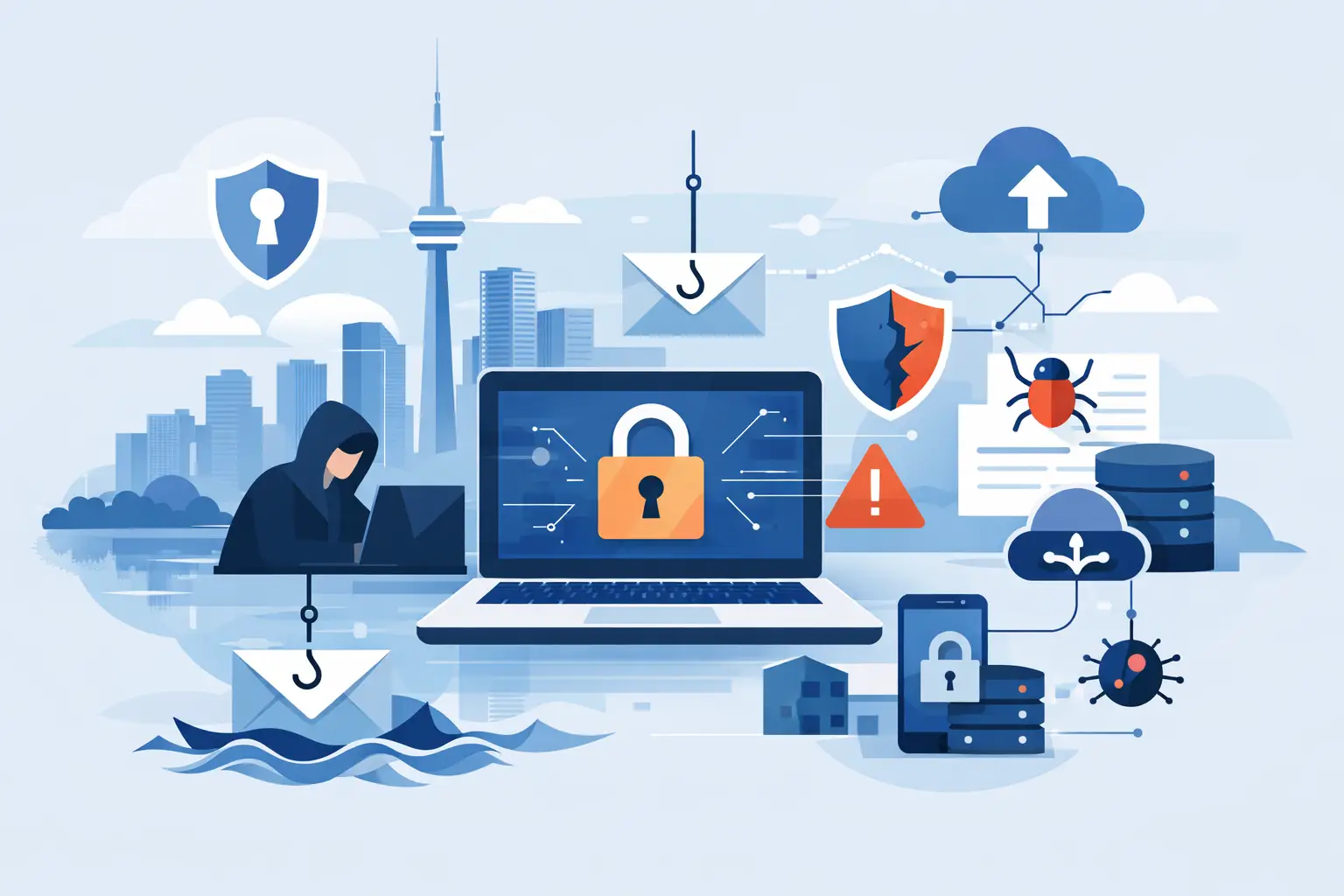
Cyber Risks GTA Businesses Need to Address
A missed email, a reused password or a convincing payment request can create serious cyber risks for a GTA business. The result is rarely limited to an IT problem. A cyber incident can interrupt sales, delay payroll, expose customer information and put hard-earned trust at risk. For a contractor, retailer, restaurant, manufacturer or professional firm, even a short disruption can be costly.
Cybersecurity measures and cyber insurance serve different purposes, but they work best together. Security practices help prevent an incident or limit its reach. Cyber insurance can help a business respond, recover and manage certain financial consequences when prevention does not hold. The right approach depends on how your business handles payments, personal information, client files, online sales and critical systems.
What Cyber Risks Look Like in a Growing Business
Cyber risk is not limited to large companies with dedicated IT departments. Small and mid-sized businesses are frequent targets because a criminal only needs one weak point: an unprotected mailbox, an employee who clicks a false invoice, an outdated remote-access tool or a vendor account that has been compromised.
The most common incidents are often ordinary-looking at first. A staff member may receive an email that appears to come from a supplier. A customer may be redirected to a fraudulent payment page. A hacker may gain access to a shared cloud folder containing client records. Ransomware can make accounting software, scheduling systems or point-of-sale terminals unavailable until a ransom is paid or systems are restored.
For GTA businesses, the exposure is often broader than owners expect. A repair shop may hold driver’s licence information, payment details and vehicle records. A restaurant may depend on online reservations and card processing. A professional service firm may store confidential documents and banking instructions. A contractor may rely on mobile devices, project-management platforms and electronic funds transfers to keep jobs moving.
A cyber event can lead to expenses in several directions at once: forensic investigation, legal advice, notifying affected individuals, restoring data, handling media inquiries, paying for business interruption and responding to third-party claims. The precise obligations and costs will depend on the facts of the incident, the information involved and applicable privacy requirements.
The Cyber Risks That Cause the Biggest Losses
Not every incident leads to a major claim. A spam email that is deleted quickly may have no impact. The larger losses usually arise when fraud, downtime and sensitive information are involved together.
Business email compromise is a clear example. A criminal may impersonate an owner, supplier or customer and ask an employee to change banking details or send an urgent wire transfer. These messages can be highly convincing because attackers may study a company’s website, social channels and email patterns first. A loss can occur before anyone realizes the request was false.
Ransomware creates a different kind of pressure. Systems can be encrypted or blocked, leaving the business unable to access files, process transactions or communicate with customers. Backups may reduce the downtime, but only if they are secure, current and capable of being restored. A business with a strong backup process may still face expert response costs and lost income while operations are affected.
Privacy breaches can be particularly difficult to manage. If client, employee or supplier information is accessed, lost or disclosed without authorization, the organization may need to investigate what happened and who was affected. The damage is not always immediate or easy to measure. Clients may ask whether their data is safe, while management must make careful decisions about communications and recovery.
What Cyber Insurance May Cover
Cyber insurance is designed to address specified losses arising from cyber incidents. Coverage differs significantly between insurers and policies, so the policy wording, limits, deductibles and endorsements matter. Buying based on premium alone can leave meaningful gaps.
Many business cyber policies may include support for incident response, such as forensic experts, legal guidance, notification costs and credit or identity-monitoring services where appropriate. They may also respond to data restoration, cyber extortion, certain funds-transfer fraud losses and business interruption caused by a covered event.
Third-party liability protection can also be important. If a client alleges that your business failed to protect its information, or if a network security failure causes financial harm to another party, a policy may help with defence costs and covered settlements. Some policies extend to media liability, which can be relevant when online content leads to allegations such as copyright infringement or defamation.
There are limits to consider. Cyber policies commonly contain waiting periods for business interruption, sublimits for specific coverages and conditions relating to security controls. Social engineering or fraudulent funds transfer coverage may have a separate limit that is lower than the overall policy limit. A policy may also exclude known incidents, intentional acts, certain contractual obligations or losses linked to unmaintained systems.
This is why it is worth discussing how money moves through your business, not simply how many computers you own. A company that regularly receives electronic payments or approves high-value transfers may need more fraud protection than a business with limited online transactions. A firm holding sensitive client files may place more value on breach response and privacy liability coverage.
How to Reduce Cyber Risks Before a Claim
Insurance is a financial backstop, not a substitute for sensible controls. Many of the most effective steps are manageable for businesses of all sizes, although the right level of investment depends on your operations and exposure.
Start with access. Use multi-factor authentication for email, banking, remote access and cloud services. Keep operating systems, software and devices updated, and remove access promptly when an employee leaves or changes roles. Staff should have access only to the systems and files needed for their work.
Next, make payment verification a routine process. A request to change supplier banking information or approve an urgent transfer should be confirmed through a known phone number or another trusted contact method. Do not rely on the contact details included in the request itself. This simple control can prevent a costly impersonation loss.
Reliable backups are equally valuable. Keep copies of critical data separate from the main network, test whether they can actually be restored and know which systems must be recovered first. A backup that has never been tested is not a recovery plan.
Employee training should be practical rather than overwhelming. Teach staff to spot unexpected attachments, unusual login prompts, urgent payment requests and messages that pressure them to bypass normal procedures. Encourage them to report concerns quickly. A culture where people can ask, “Does this look right?” is often more useful than a one-time training session.
Finally, know who to call if an incident occurs. Your plan should identify internal decision-makers, your IT support provider, key vendors and your insurance contact. Fast reporting matters. Delaying notice or hiring vendors without insurer approval can affect how a claim is handled under some policies.
Choosing Coverage That Fits Your Operations
The best cyber insurance policy is not necessarily the one with the highest limit or lowest price. It is the one that matches the real consequences your business could face. A licensed broker can help compare insurers, explain differences in coverage and identify questions that deserve attention before a loss occurs.
When reviewing options, consider the revenue your business could lose during a systems outage, the type and volume of data you collect, your reliance on outside technology providers and the amount of money transferred electronically. Also ask whether the policy includes 24-hour breach response support, how ransomware and cyber extortion are treated, and whether social engineering coverage meets your payment exposure.
Businesses should also review contractual requirements. Landlords, larger clients, industry partners or government procurement agreements may require particular insurance limits or privacy practices. Meeting a requirement on paper is not always the same as having coverage that responds well to your actual operations.
A yearly review is sensible, especially after adding online sales, hiring staff, introducing remote work, changing payment procedures or adopting new software. These changes can improve efficiency, but they can also change the cyber risks your policy was originally designed to address.
A Practical Conversation Can Protect More Than Your Data
Cyber incidents are disruptive because they affect the relationships that keep a business running: customers, employees, suppliers and lenders. Clear security habits and carefully selected insurance can give an owner more control when an unexpected event occurs.
Multi Risk Insurance Brokers & Financial Group can help GTA business owners review their exposure, compare cyber insurance options from multiple insurers and look for terms that suit their operations and budget. A short conversation before an incident can make the response far less stressful if one ever happens.